Guia
300W Pulse Laser Cleaning Machine LY-FLC300M: Specs, Modes and Applications
A specification-level look at the LY-FLC300M 300W pulse laser cleaner: pulse parameters, eight scan modes, field lens options and where the machine is used.
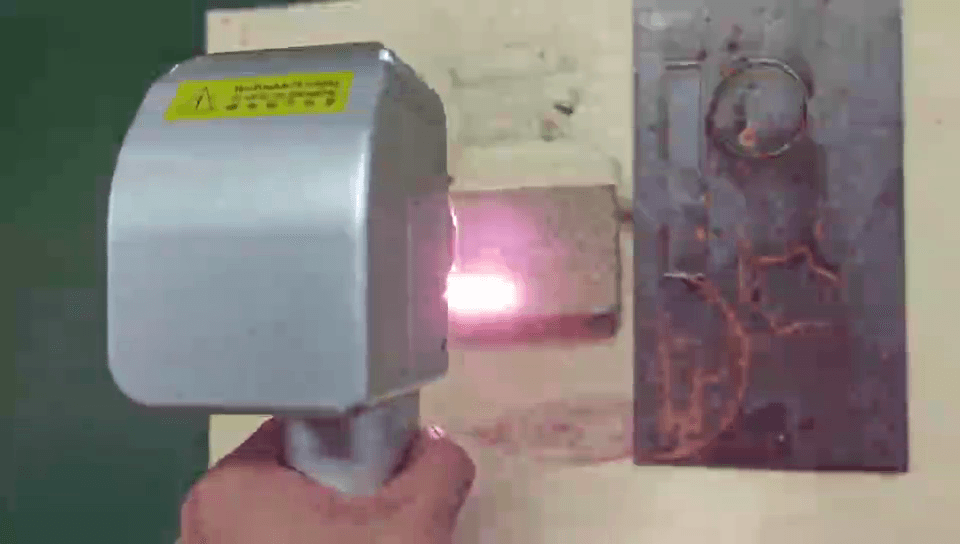
Quick Answer: The LY-FLC300M is a 300W pulse fiber laser cleaning machine. Short pulses of 80 to 500 nanoseconds vaporize the surface layer — resin, paint, oil, grease, rust, coating, plating and oxides — while the base metal is left untouched. It is non-contact, needs no chemicals and no consumables, and runs either hand-held or on a robotic arm. 1. What the Machine Does Pulse laser cleaning removes a surface layer instead of abrading it. Each pulse delivers energy into a thin top layer, which vaporizes and lifts away, leaving the substrate intact. Because there is no contact with the part, there is no scratching, no secondary waste media and no chemical effluent to dispose of. The cleaning head weighs under 1.6 kg, so an operator can work along a weld seam or a mold surface by hand, or mount the head on a robot for repeat work. 2. Key Specifications Average laser power is 300W and above, with pulse width from 80 to 500 nanoseconds and maximum single pulse energy of 13 mJ. Power is adjustable from 10% to 100% and frequency from 10 to 1000 kHz. The beam is delivered through a 5 m optical fiber. The system is water-cooled, runs on single-phase 220V 50/60Hz, and total machine consumption stays under 3000W including the chiller. The cabinet measures 1055 x 620 x 1090 mm and weighs about 240 kg, while the hand-held cleaning head stays under 1.6 kg. 3. Scan Modes and Optics The scan range is continuously adjustable from 0 to 145 mm with dual-axis control, and the scanning frequency reaches 300Hz and above. Eight scan patterns are built in: line, rectangle type 1, rectangle type 2, circle, sine wave, double helix, free-form and ring. This lets the operator match the beam path to flat plate, pipe, weld seam or irregular geometry. The standard field lens is F254 with a depth of focus of about 20 mm; F160, F210, F330 and F420 are available as options. A built-in process database stores recommended settings, and the interface supports nine languages. 4. Applications and Operation Notes Typical applications include shipbuilding, auto repair, rubber molds, high-end machine tools, rail parts and environmental equipment. The machine removes resin, paint, oil stains, dirt, rust, coating, plating and oxide layers. Before starting work, let the chiller bring the water temperature up to around 22 degrees C, then check the protective lens and set the process number for the material at hand. For weld preparation, clean the joint area first so the beam meets bare metal rather than oxide. FAQ Q: Does the laser cut into the base metal? A: No. Cleaning is non-contact and each pulse only removes the surface layer, so the substrate is not abraded or deformed. Q: Can one machine handle both flat plate and curved parts? A: Yes. The scan range adjusts continuously from 0 to 145 mm and the eight patterns include free-form and ring modes for curved and irregular surfaces. Q: What does the package include? A: The main unit, the hand-held cleaning head, the built-in process database, SD-3 protective glasses, five protective lenses and a Zeiss lens cleaning kit.