
Guide
Consumables and Daily Upkeep on a Pulsed Laser Cleaning Machine
No grit, no solvent, and still a maintenance routine. What to check every shift on a 300 W pulsed cleaning machine, and why the lens and the cooling loop decide the result long before the source does.
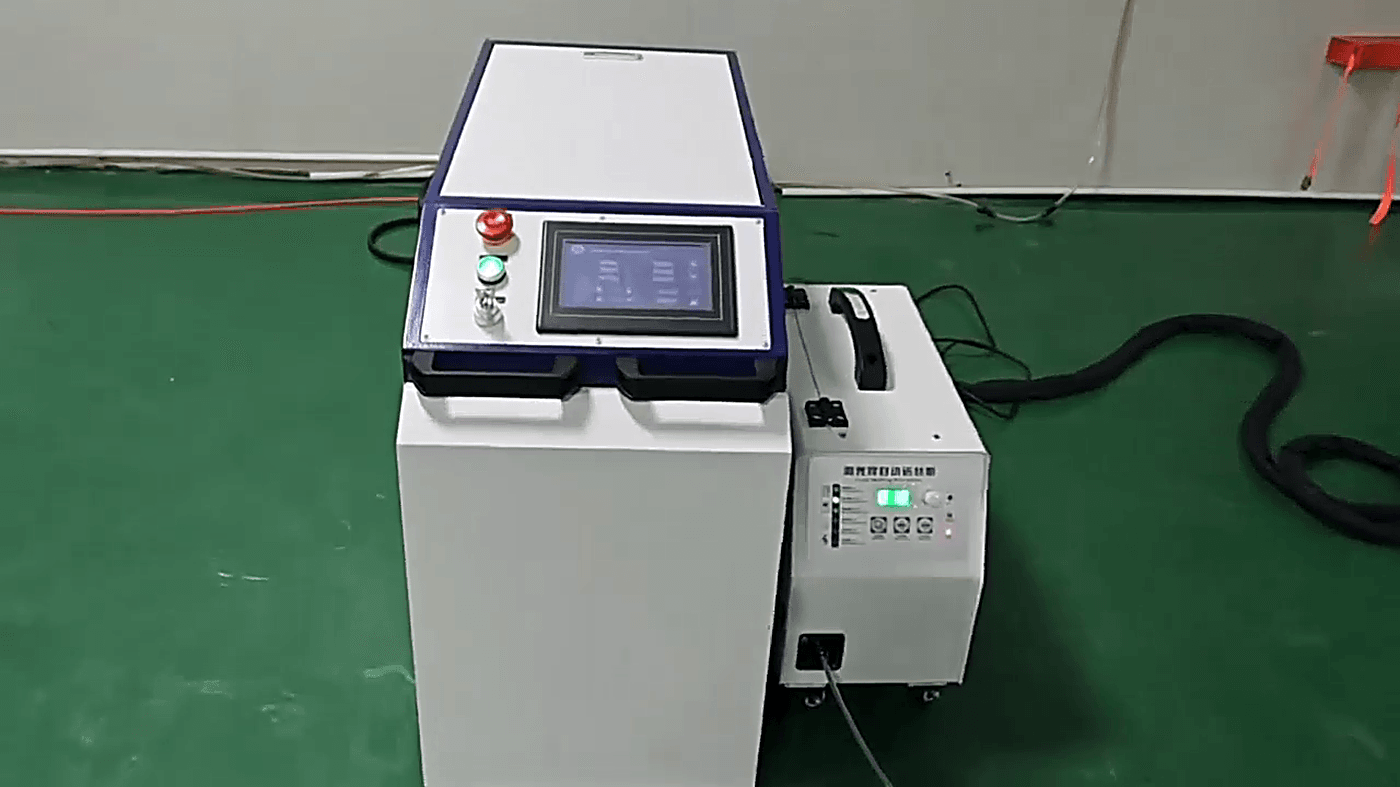
Quick Answer A pulsed laser cleaning machine consumes no blasting media and no chemicals. Its upkeep is concentrated on four points: the protective lens and field lens in front of the beam, the water cooling loop, the fiber connector, and the scan head mechanism. On the LY-FLC300M the delivery fiber is 5 m and the head weighs under 1.6 kg, so the head is handled constantly and the lens surface is exposed to spatter and dust on every job. Check the lens before each shift, keep the cooling loop at its specified level and temperature, and log any change in cleaning result, because a slow loss of performance usually starts at the lens, not at the source. 1. What is not a consumable The first thing that changes when a shop moves from blasting or chemical stripping to laser cleaning is the procurement list. There is no media to reorder, no slurry to filter, no bath to titrate. The recurring inputs are electrical power and cooling water. That does not mean the machine is maintenance free: it means the maintenance moves from process chemistry to optics and thermal control, which is a different skill and a different checklist. 2. The optical chain: protective lens and field lens The beam leaves a 5 m fiber, passes through the scan head and exits through the field lens. On this machine the field lens is an F254 with a 20 mm depth of focus. Everything the cleaning process throws up in the air, spatter, dust, paint flakes and oxide, passes close to that lens. The protective lens in front of it is there to take that exposure instead of the lens behind it. The check is visual and cheap: look at the protective lens before the first part of the shift. A burned spot, a haze, a ring of discoloration or a chip on the coating all change what reaches the work. The symptom on the part is subtle: the same settings clean slightly slower, or leave a faint film that used to come off. That is the moment to change the lens, not after a part has been scrapped. When cleaning metal that throws spatter, or when working overhead where debris falls back toward the head, the lens deserves a look between parts as well as at shift start. 3. Cooling and electrical supply The LY-FLC300M is water cooled, runs on single-phase 220 V, and the complete machine draws under 3000 W. The cooling loop is not an accessory; it is how the source and the head stay inside their operating temperature. Check the water level and the temperature before a long run, keep the circuit clean and unobstructed, and treat any rise in temperature at the same settings as a signal to stop and look, rather than a reason to turn the power up. Power percentage runs from 10 to 100 percent and repetition rate from 10 to 1000 kHz. Both sit on the same thermal budget: a job that runs near full power at a high repetition rate puts more heat into the optics than a low-power finishing pass. Shops that alternate heavy removal and light finishing during a shift should watch the temperature pattern rather than average it away. 4. Handling, storage and the fiber A head that weighs under 1.6 kg gets carried, set down, leaned against a bench and picked up again, dozens of times per shift. That is the normal use the design allows, but it also means the head gets bumped. Set it down on its rest, not on the lens end. Cap the head when it is not in use. Keep the 5 m fiber out of walkways and off sharp edges, and do not coil it tighter than the specified bend allows. The fiber connector is the second place where a slow decline starts. Dust on the connector face does the same thing a dirty lens does: less energy at the work and more heat where it should not be. Clean it on a schedule rather than on symptoms, and inspect it whenever the head has been off the machine. A shift-start routine of lens check, water check, connector check and a test pass on a scrap piece takes a few minutes and catches almost everything that goes wrong slowly. FAQ How often should the protective lens be replaced? The machine documentation does not set a fixed interval in hours, because the interval depends on what is being cleaned. Replace on condition: a burned spot, haze, discoloration or coating damage, or a visible drop in cleaning result at unchanged settings. Shops that clean painted or heavily scaled steel will change lenses far more often than shops cleaning light oil film. Can the machine run without the chiller? No. Water cooling is the designed thermal path for this machine, and the source and head are specified to run with it. Running without the cooling loop is outside the operating conditions and puts the optics at risk. Do higher power and frequency wear the optics faster? Higher power percentage and higher repetition rate mean more heat in the optical chain, and heat plus dust is what degrades a lens coating. The machine allows 10-100 percent power and 10-1000 kHz, so the practical measure is to use the lowest settings that finish the job, and to keep the lens and the cooling loop in condition so the settings do not have to be pushed upward to compensate.