
Guide
300W Pulse Laser Cleaning Machine: How It Works and Where to Use It
An overview of the LY-FLC300M 300W pulse laser cleaner — cleaning principle, scan patterns, applications and package contents.
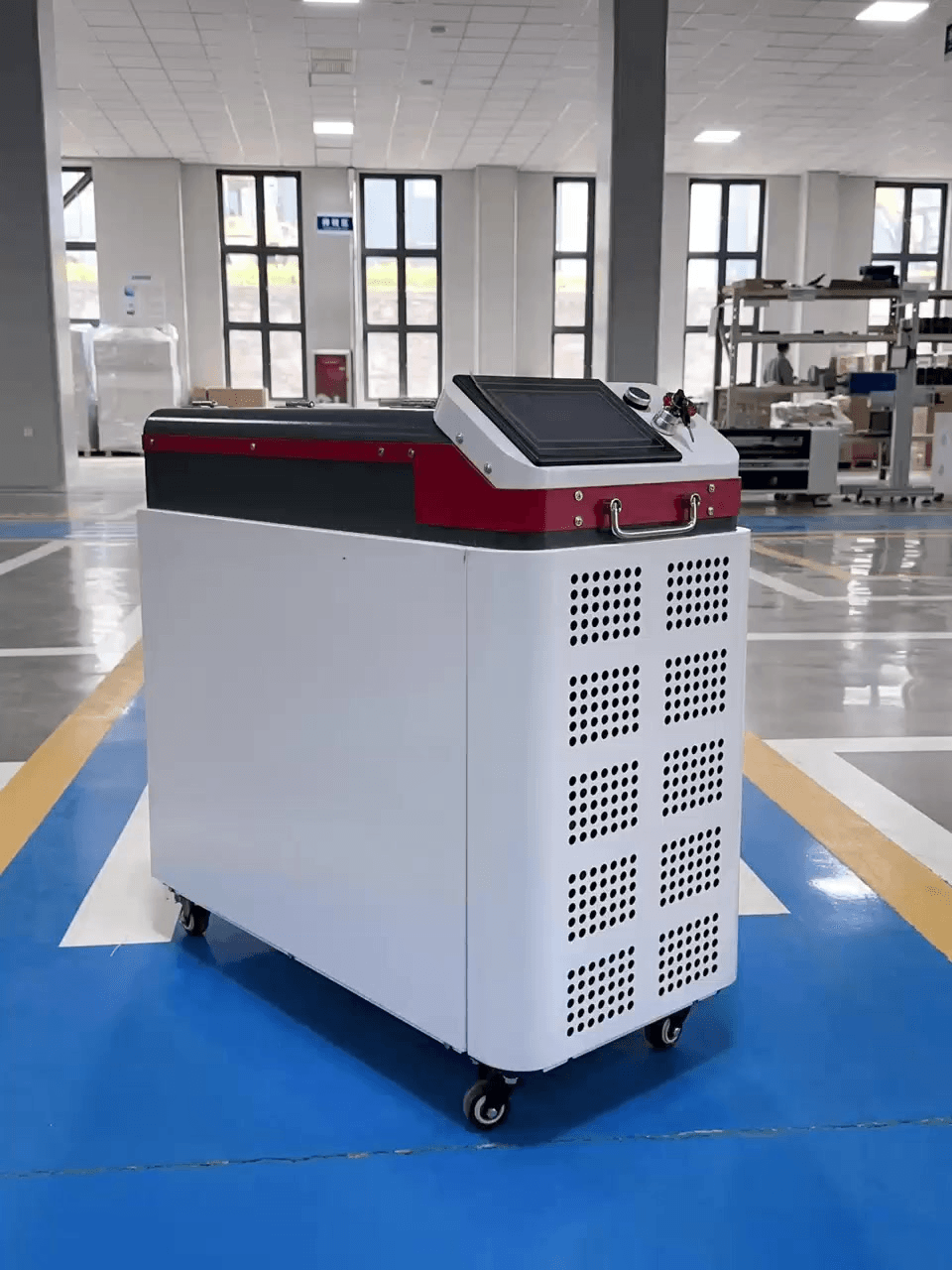
Quick Answer: The LY-FLC300M is a 300W pulse laser cleaning machine that removes rust, paint, oil, dirt, coatings, plating and oxides by vaporizing the surface layer with short laser pulses. It works without chemicals or consumables, protects the base material, and supports both handheld and automated operation. 1. How Pulse Laser Cleaning Works The cleaner delivers 300W average power in short pulses from 80 to 500 nanoseconds. Each pulse vaporizes a thin surface layer, so rust, oil, paint and oxide are removed layer by layer. Because the process is non-contact, the base material is not scratched or damaged. The scan range can be adjusted continuously from 0 to 145 mm. 2. Scan Patterns and Controls Eight scan patterns are built in: line, rectangle, two rectangle variants, circle, sine wave, double helix, free-form and ring. This lets the operator match the beam path to the part geometry, including curved surfaces. A built-in process database stores recommended settings, and the interface supports nine languages with easy switching. 3. Where to Use It Typical applications include ships, auto repair, rubber molds, precision machine tools, railway parts and environmental equipment. The machine removes resin, paint, oil, dirt, rust, coating, plating and oxide layers. The handheld cleaning head weighs under 1.6 kg, and the unit is water-cooled with a 5 m optical fiber, so operators can work close to the part. 4. Package Contents The package includes the main unit, the handheld cleaning head, the built-in process database, protective glasses (SD-3), five protective lenses and a Zeiss lens cleaning kit. Power supply is single-phase 220V with consumption under 3000W including the chiller. FAQ Q: Will laser cleaning damage the metal underneath? A: No. Cleaning is non-contact and each pulse removes only the surface layer, so the base material stays intact. Q: Can it clean curved or uneven surfaces? A: Yes. The scan range is continuously adjustable and the eight scan patterns include free-form and ring options for irregular geometries. Q: Does it need consumables or chemicals? A: No. The process uses only the laser beam, with no chemical waste and no consumables beyond regular lens care.